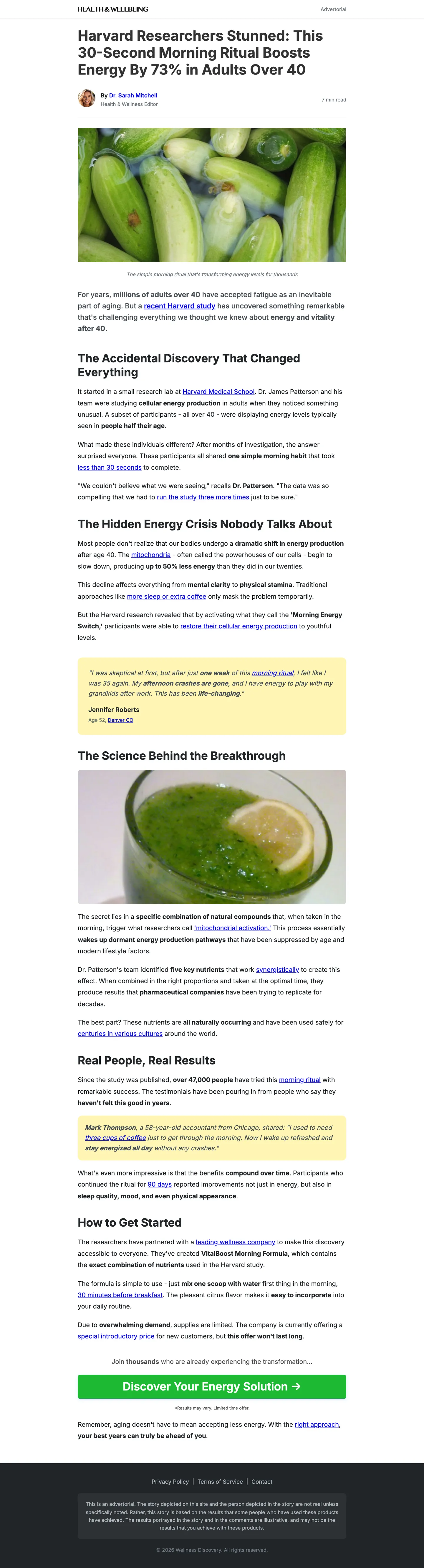
Short-form VSL advertorial
A fast-moving direct-response advertorial that bridges the click into one mechanism, a few proof blocks, and a strong CTA.
These are real LandGoose advertorial previews. Use them to see when a campaign needs a short-form bridge page, a long ecommerce pre-sell, a medium-form app-install flow, or a comparison-style advertorial.
Most people look at advertorials and notice the layout first. That is the wrong lens. The real job is to see how the page matches the click, builds belief, handles objections, and earns the transition into the offer.
The type you should use depends on the offer, traffic source, proof available, and how much pre-selling the click needs before the CTA.
Use the carousel for a quick visual scan, then jump into the breakdowns below to see when each type makes sense.
There is no single best advertorial. There is only the format that fits the traffic, the offer, and the next step you want the reader to take.
A fast-moving direct-response advertorial that bridges the click into one mechanism, a few proof blocks, and a strong CTA.
Best for: Affiliate offers, health funnels, and campaigns where the sales page already does the heavy closing work.
This format gives cold traffic more context, more trust signals, and more product education before the product page.
Best for: Shopify products, problem-aware cold traffic, and physical products that need more than a basic PDP to convert.
App-install advertorials usually sit in the middle: enough copy to create desire and trust, but short enough to keep momentum.
Best for: App downloads, browser extensions, utilities, and funnels where the install step should feel fast and low-friction.
The page borrows the feel of an article or news feature so the reader arrives in discovery mode instead of pure sales resistance.
Best for: Health, senior, or authority-led offers where tone, trust, and explanation matter as much as the product itself.
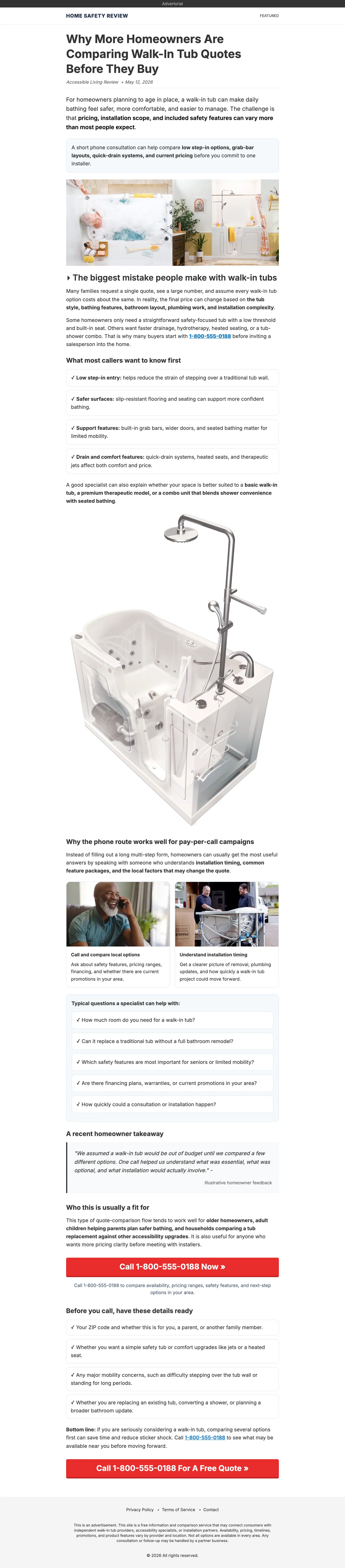
Comparison pages work when the user is already shopping around and wants a guided decision instead of another hard pitch.
Best for: Lead gen, pay-per-call, higher-consideration offers, and verticals where comparing options feels natural.
This is the lighter, curiosity-led style that often pairs well with native traffic because it feels more like a useful discovery than a hard sell.
Best for: Native ads, travel deals, consumer tools, and curiosity-led angles that should feel easy to read and easy to click through.
Native and discovery traffic usually wants a softer entry. Harder direct-response traffic can handle a faster pitch.
If the offer needs education, the page needs more room. If the offer is already understood, the page can stay tighter.
When you have stronger authority, testimonials, screenshots, or stats, you can support a heavier editorial or comparison flow.
A cart click, app install, quote request, and sales-page transition do not need the exact same advertorial pacing.
The best pages scan cleanly on mobile with clear subheads, short paragraphs, and obvious next steps.
The winning move is having a repeatable format you can duplicate, re-angle, translate, and test fast.
Learn what an advertorial is, how it works, when to use one, and the examples, pros, cons, and tips that matter before you build one.
Read articleSee how ecommerce brands can use advertorials to warm up cold traffic, explain products better, and improve the path into checkout.
Read articleLearn how native ads and advertorial pages work together, from message match and headline alignment to proof, CTAs, and funnel measurement.
Read articleFollow a simple step-by-step process for building an advertorial page that is easy to read, persuasive, and ready to test.
Read articleUse this advertorial copywriting framework to move from hook and problem setup to product reveal, proof, objection handling, and CTA.
Read articleLearn how to test advertorial angles by changing hooks, leads, proof order, and CTAs while keeping the core offer and page structure manageable.
Read article© 2026 Landgoose – All Rights Reserved