Affiliate listicles can bridge the gap between an ad click and an offer by organizing reasons, comparisons, objections, or recommendations into a page that is easy to scan. The format is useful only when the content, disclosure, tracking, and destination remain accurate.
What Is an Affiliate Marketing Listicle?
An affiliate marketing listicle is a list-based article with a commercial goal. It may recommend one offer through several reasons or compare multiple offers through separate entries.
The page normally sits before the merchant's sales page, product page, VSL, app store listing, or lead form. Its job is not to replace the destination. Its job is to make the next click more understandable and relevant.
Examples include:
- "5 Reasons Freelancers Are Trying This Time-Tracking Tool"
- "7 Things to Check Before Choosing a Home Workout Program"
- "6 Common Mistakes People Make When Comparing Travel Insurance"
- "8 Email Tools for Small Ecommerce Teams"
An affiliate listicle should disclose its commercial relationship clearly. It should also distinguish researched facts from opinions and avoid presenting commissions as independent editorial proof.
Why Affiliates Use Listicles
Listicles give affiliates a flexible middle layer between the traffic source and the offer.
They can help you:
- continue a numbered ad hook on the landing page
- explain several benefits without a long narrative
- answer objections in separate, scan-friendly items
- compare products using consistent criteria
- route different entries to different offers
- create new angle variations without changing the merchant's page
- adapt the same researched structure for another locale
These are workflow benefits, not guaranteed performance outcomes. The value depends on the quality of the traffic, offer, claims, page, and destination.
One-Offer Affiliate Listicles
A one-offer listicle makes one recommendation and sends every commercial CTA to the same destination.
Useful structures include:
Reasons
"5 Reasons New Sellers Use Tool X to Track Their First Campaigns"
Each reason should be distinct: setup, reporting, integrations, pricing model, and support should not collapse into repeated claims about convenience.
Things to know
"7 Things to Know Before Joining an Online Language Program"
This can cover curriculum, schedule, teacher access, device requirements, cancellation, and who the program fits.
Mistakes
"6 Mistakes to Avoid When Choosing a Website Hosting Plan"
Each mistake becomes a buying criterion, and the recommended offer should earn its place by addressing those criteria.
Tips or steps
"5 Steps to Organize a Simple Product-Research Workflow"
The offer can support the workflow, but the article should still provide useful context instead of turning every step into the same pitch.
Multi-Offer Affiliate Listicles
A multi-offer listicle contains several recommendations, each with its own destination. Typical formats include best-product roundups, alternatives, tools stacks, and "best for" lists.
Every entry should preserve:
- a stable product or offer identity
- the criteria behind its inclusion
- audience or use-case fit
- relevant evidence and limitations
- an accurate CTA
- the correct affiliate destination
Define whether the page is ranked. A numbered article is not automatically a ranking. If item one is called "best overall," explain the criteria and apply them consistently to the remaining entries.
Choose the Format by Reader Intent
Problem-led traffic
Use signs, mistakes, or tips when the reader first needs to understand the problem. The offer should appear as a logical option after the page establishes useful context.
Product-led traffic
Use reasons, features, or use cases when the ad already shows the product and the reader expects more detail.
Comparison traffic
Use a roundup, alternatives list, or best-for list when the reader is actively evaluating options. Place comparison criteria before the recommendations.
Story-led traffic
Consider a classic advertorial when the creative introduces a personal journey, discovery, or mechanism that depends on narrative progression. See advertorial vs listicle for the distinction.
Research Before Writing
An affiliate does not control the merchant's product, fulfillment, or claims, so verification matters.
Review:
- the current offer page and terms
- product documentation and merchant-provided evidence
- authentic customer feedback where permitted
- pricing, trial, shipping, renewal, and cancellation details
- geographic and device restrictions
- affiliate-program rules
- traffic-source advertising policies
- disclosure requirements in the target market
Record the date of volatile information. Pricing, bonuses, product availability, and affiliate terms can change after publication.
A Practical Affiliate Listicle Structure
1. Headline with a defined promise
Tell the reader what the list contains and who it helps. Avoid a sensational number or vague curiosity that the items cannot satisfy.
2. Short introduction
Confirm the ad angle, explain the selection scope, and disclose the commercial relationship where appropriate. A listicle introduction should orient the reader rather than delay the list.
3. Clear criteria
For a comparison or roundup, state how offers were evaluated. For one offer, explain what each reason or item is intended to clarify.
4. Distinct list items
Each item should have one main point, supporting explanation, relevant proof, and a destination only when the reader understands what comes next.
5. Honest limitations
Explain who an offer may not fit, important conditions, and where information can change. Credibility comes from useful evaluation, not from making every item sound perfect.
6. Accurate CTA handoff
Use button copy such as See Plans, Check Eligibility, View Product Details, or Watch the Presentation when it describes the destination more accurately than Buy Now.
Listicles for Native Ads
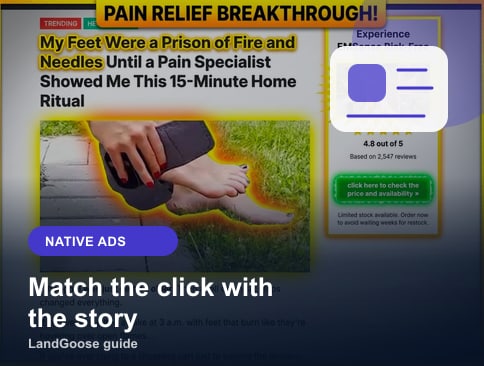
Native ads and listicles can share an editorial reading pattern, but message continuity is essential.
If the ad promises "5 signs," the landing page should present those signs clearly. If the page becomes a product pitch before delivering the promised list, the transition feels broken.
Check the first screen for:
- the same topic and audience as the ad
- a clear article title
- an appropriate commercial disclosure
- a useful reason to continue
- no unsupported implication of independent news coverage
Read native ads to advertorial for a broader paid-traffic handoff framework that also applies to listicles.
Listicles for Social and Ecommerce Traffic
For Meta, TikTok, and other mobile-heavy placements, write headings that communicate the argument during a quick scan. Keep each item visually coherent and avoid burying the relevant product image or CTA far from its explanation.
For ecommerce offers, the merchant page must continue the same product, variant, and promise. The listicle can educate, but the store remains responsible for accurate price, delivery, returns, and checkout information.
Tracking Affiliate Listicles
Preserve the tracking parameters and click identifiers required by your affiliate network or tracker, but do not expose sensitive user data in URLs.
At minimum, distinguish:
- campaign and traffic source
- creative or ad angle
- landing-page version
- listicle format or hypothesis
- item identity for multi-offer pages
- destination offer
Measure the full path:
- ad click to listicle view
- listicle view to outbound click
- outbound click to merchant conversion
- approved conversion, revenue, or qualified lead
Page CTR is diagnostic. The business outcome is the downstream result after network validation, refunds, reversals, or lead-quality checks.
Disclosure and Trust
Affiliate content should make its commercial relationship understandable. Exact requirements vary by market, platform, network, and claim category, so confirm the rules that apply to your campaign.
Good operational habits include:
- placing a clear disclosure where readers can notice it
- avoiding fake publication identities or independent-review claims
- using only evidence you can trace to the relevant offer
- distinguishing user experiences from guaranteed outcomes
- keeping health, finance, employment, and other sensitive claims within applicable rules
- removing expired bonuses, prices, and availability statements
Testing Affiliate Listicle Angles
Test one clear hypothesis at a time:
- reasons versus mistakes framing
- product-led versus problem-led opening
- one-offer listicle versus classic advertorial
- different selection criteria for a roundup
- headline and hero change with the rest of the page stable
- CTA language that better describes the destination
Use how to test advertorial angles as a testing framework; the same isolation and measurement principles apply to listicles.
Creating Affiliate Listicles in LandGoose
LandGoose Studio supports One Offer and Multi Offer Listicles. You can generate the copy from an offer and source material or bring your own prose, bullets, or numbered list.
For a one-offer page, the existing conversion destination is shared across the list. For a multi-offer page, each entry keeps its own protected destination. Review the proposed items, claims, disclosure, links, and preview before publication.
Start your 7-day trial to build a Listicle around an offer you are authorized to promote.
Affiliate Listicle FAQ
What is an affiliate marketing listicle?
An affiliate marketing listicle is a list-based article that helps readers evaluate a problem, product, or group of offers and contains disclosed affiliate links to relevant destinations.
Can a listicle promote a single affiliate offer?
Yes. A one-offer listicle can organize distinct reasons, use cases, tips, or objections around the same offer while keeping one destination.
Where should affiliate links appear in a listicle?
Place links where the reader has enough context to understand the next step. Multi-offer listicles should keep each CTA attached to the correct offer destination.
Continue with the right next step